

Fiji has secured EUR 240,000 in climate finance through the Government of Denmark and the Pacific Community (SPC) to address the growing challenge of climate-related loss and damage to Fiji’s agriculture sector. The project proposal was approved by SPC earlier this year and will focus on rice production in Vanua Levu, where saltwater intrusion is reducing crop yields and threatening food security.
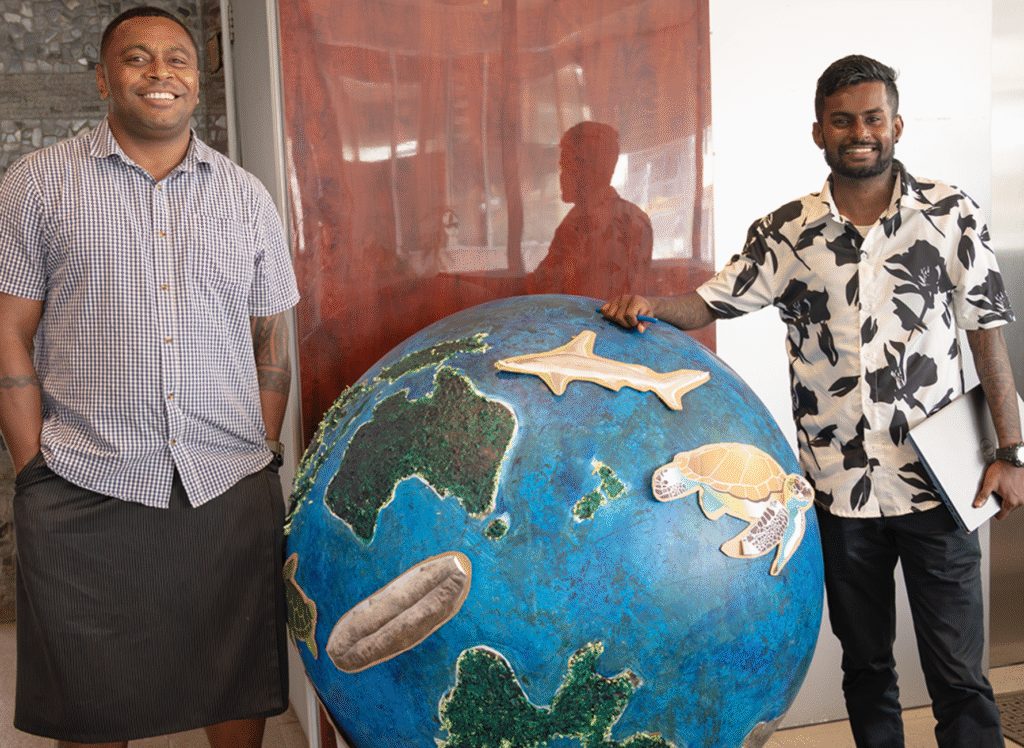
Access to this new funding to support efforts to better address loss and damage is the result of close collaboration within the Ministry of Environment and Climate Change (MECC) Climate Change Division (CCD), supported by the Climate Finance Capacity Support Programme (CFCSP). Three embedded CFCSP personnel – Special Adviser (Climate Change), Daniel Lund, and the CCD Project Development Unit (PDU) Climate Mitigation Officer, Mishek Nair, and PDU Climate Adaptation Officer, Mosese Nabulivou – worked together with their MECC colleagues to design and refine the proposal and progress it through to submission and approval.
The decision to focus on agriculture followed national discussions on how best to expand Fiji’s loss and damage efforts. Fiji is well known for its advanced national framework for the planned relocation of communities in response to an array of climate-related risks, but the CCD team had been hearing from other ministries that more information on agricultural impacts, and how to respond, was required.
Rising food prices, fewer farmers staying engaged in the sector, and regional reports of agriculture struggling under climate stress all pointed to the need for a deeper assessment.
Mosese and Mishek led the groundwork for developing the project proposal and formulated an approach that focused on the rice sector. They identified a location in Vanua Levu where saltwater intrusion was impacting rice yields and defined gaps in the available information, including: the degree to which sea level rise was contributing; what, if any, adaptation options to saltwater intrusion existed; and determining whether this was an ongoing source of loss and damage that meant rice could not be grown there in future.
Building on the assessment components of the draft project proposal compiled by the PDU, Daniel articulated how the findings would inform efforts to develop potential financial modalities and arrangements for responding to rice production losses. Such modalities could include financial mechanisms such as parametric insurance.
Importantly, the embedded CFCSP personnel aimed to ensure the project would generate policy recommendations based on the assessment report that could be used to explore potential approaches for alleviating the burden of agricultural loss. The project was also designed with a view to accessing further finance through the Loss and Damage Fund and the Santiago Network.
We were able to link the proposal to a future in which this work helps us to leverage access to further finance from the Loss and Damage Fund or from the Santiago Network. We wanted to ensure that the technical assessment would inform longer-term consideration of Fiji’s arrangements for responding to loss and damage. We knew that more information was required to understand agricultural loss and the PDU was able to work with the Ministry of Agriculture to zoom in on a particular loss and damage issue that the technical assistance could help Fiji to better understand.
— Daniel Lund, Special Adviser (Climate Change), Ministry of Environment and Climate Change
Following further work by the PDU to develop budgets and risk mitigation arrangement (including safeguards for ensuring assessment work would not disrupt communities and consideration of gender sensitivities), SPC reviewed the proposal prior to informing MECC of the approval.
This process is just one example of the successful collaboration between the CFCSP-supported personnel within the CCD, with funding also secured to date from the Canada Fund for Local Initiatives and the Santiago Network.
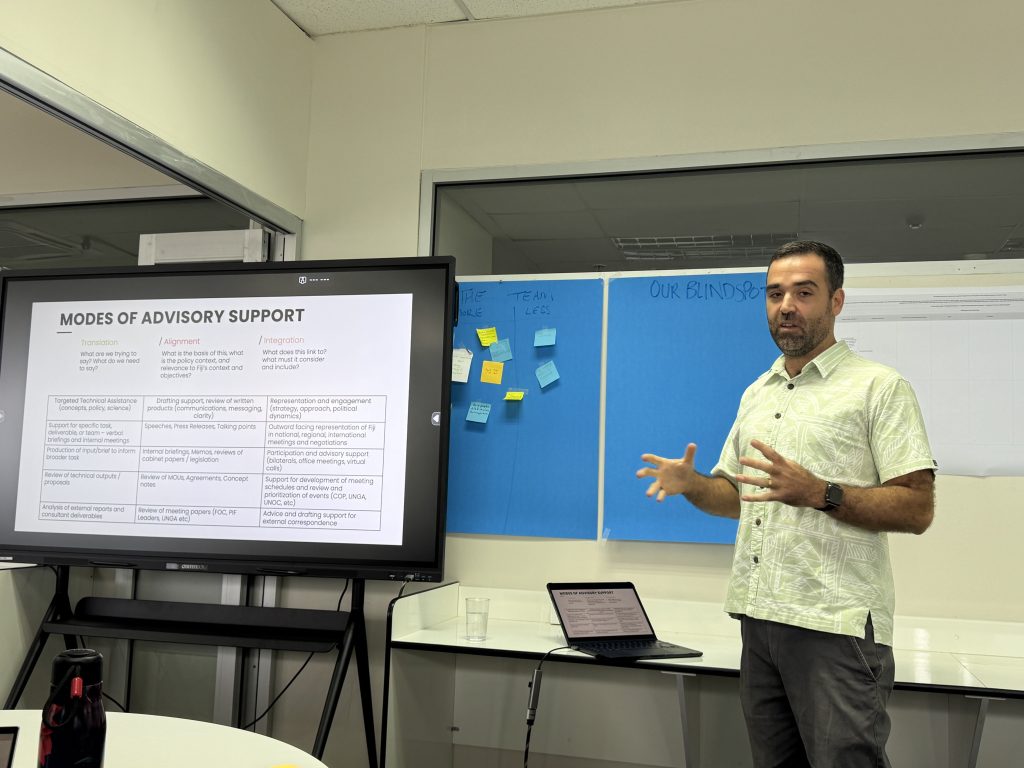
By combining technical depth with strategic oversight, the 3 CFCSP-supported roles helped Fiji not only secure climate funding but also position itself to leverage larger, longer-term finance for loss and damage.
_______________________
Feature image: MECC Permanent Secretary, Dr Sivendra Michael, meets with New Zealand Government representatives in Suva, Fiji.