
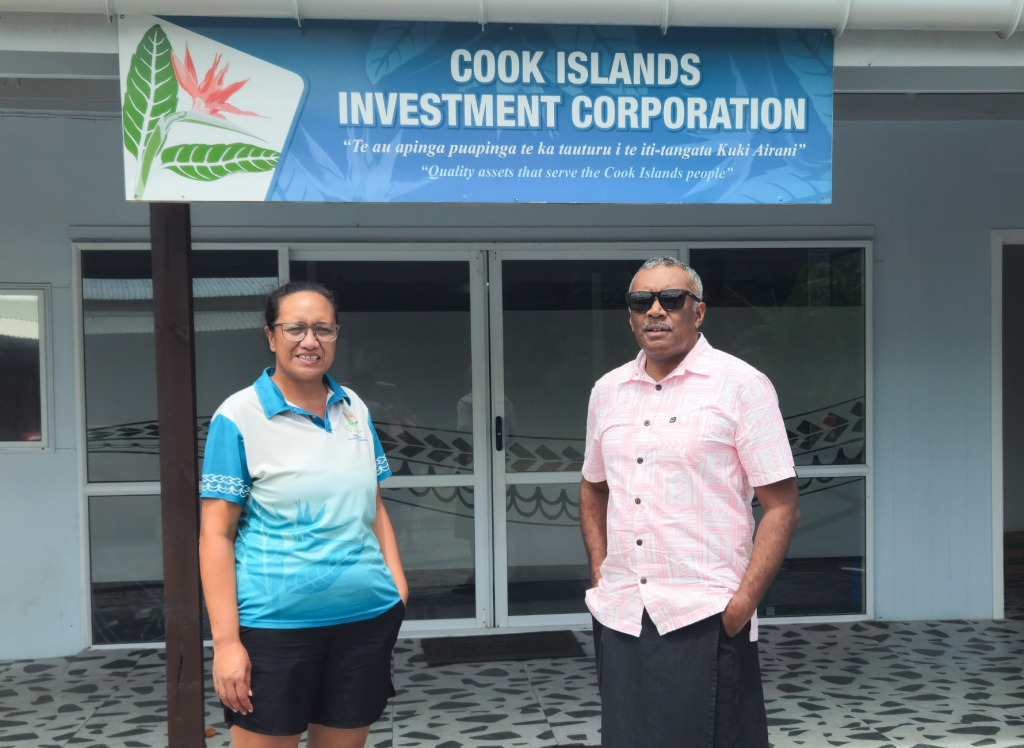
As the agency responsible for government-owned buildings, major projects, public facilities and public places, the Cook Islands Investment Corporation (CIIC) is at the centre of efforts to ensure public infrastructure is resilient to climate impacts while also supporting mitigation and adaptation measures.
As CIIC’s General Manager, Asset Development, Anne Taoro, explained, the CIIC’s mandate includes not only infrastructure management but identifying and accessing the necessary resourcing.
“We build and manage everything from government buildings to public facilities,” said Anne.
“About half of our projects are designed internally and half are outsourced. Because we have limited specialist expertise in-country, we often need to engage external partners.”
Aligning CFCSP support with national priorities
In 2024, the Climate Finance Capacity Support Programme (CFCSP) reached out to Cook Islands Government ministries and agencies to identify support needed to progress climate-related priorities.
At the time, CIIC was preparing 2 major projects: the Akamatutu’anga To Tatou Ora’anga Meitaki (ATOM) project, funded through the Green Climate Fund, and the Aitutaki Renewable Energy Project Stage 2. Both required specialised assessments and data in order to progress.
The timing was right when we received a memo from the Climate Finance Capacity Support Programme. We knew we needed to complete both pieces of work but we didn’t have the available specialists or funding support to engage external resources.
- Anne Taoro, General Manager, Asset Development, CIIC
Through the CFCSP, CIIC was able to engage Beca, a New Zealand-based engineering consultancy, and Entura, an Australian energy and hydropower consultancy, to deliver on these outstanding pieces of work.
Beca was contracted to carry out detailed structural assessments of health facilities and develop a practical methodology for ongoing climate risk assessments for direct use to the ATOM project and future use by the CIIC and other government agencies. Entura was contacted to develop specific designs and costings needed for Stage 2 of the Aitutaki Renewable Energy Project.
Strengthening evidence for investment decisions
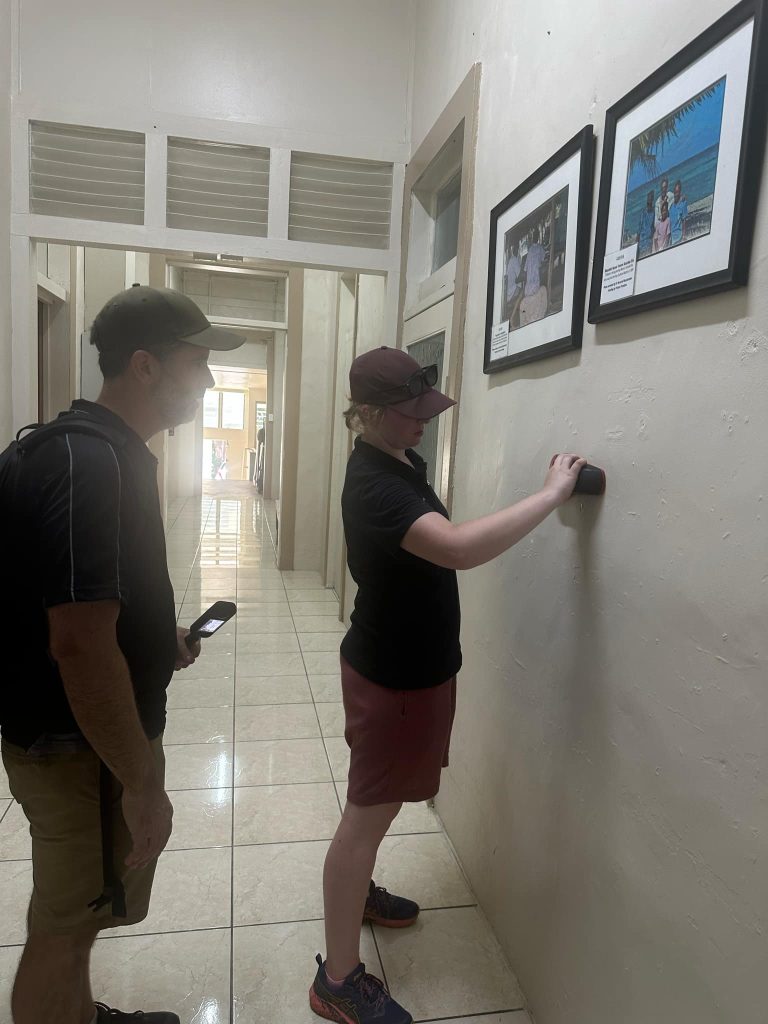
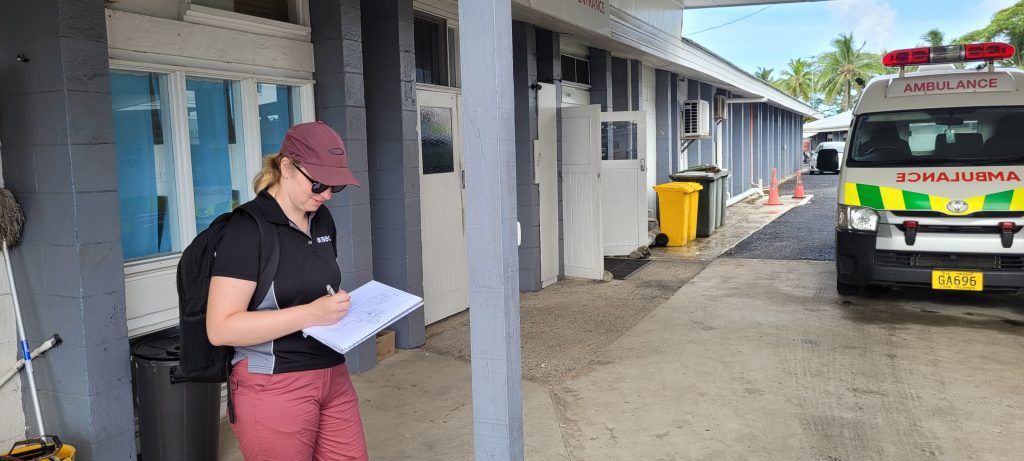
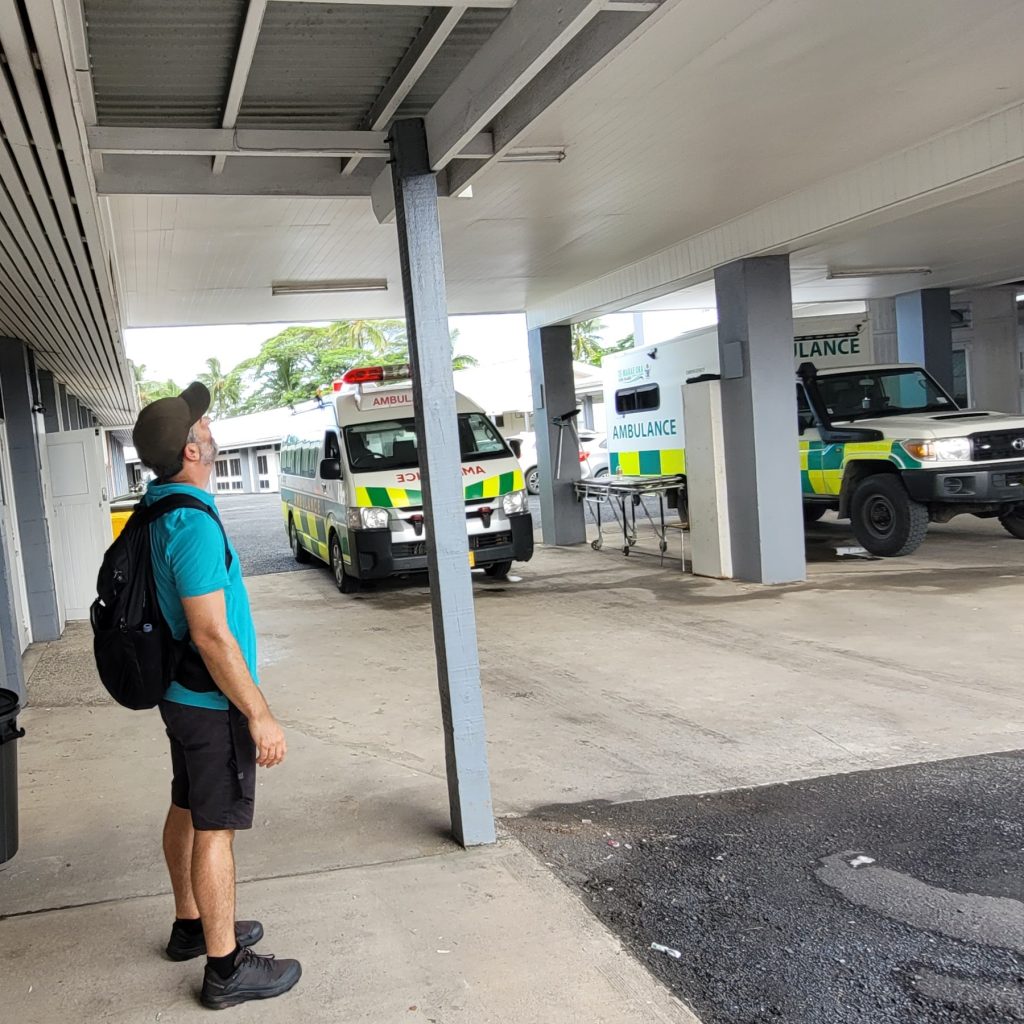
The first part of Beca’s work involved structural assessments of health facilities across the Cook Islands, aiming for 90% coverage. Despite inter-island travel disruptions and a flood event that prevented all planned islands from being reached, the Beca team managed to assess around 80% of buildings nationwide.
The second component of Beca’s assignment involved providing CIIC with new vulnerability and risk assessment methodology and tools that the CIIC and other agencies could use for health and other infrastructure. The methodology and tools have already been put into action.
“We’re now using it across another programme – the Rarotonga Safety Shelters programme. It’s a grant facility that helps community groups strengthen their halls for use as emergency shelters,” she said.
The Rarotonga Safety Shelters programme is funded by the Cooks Islands Government and the CIIC intends to expand the programme to other islands that currently lack cyclone shelters.
Making climate finance go further
Under the ATOM project, around USD 7 million has been allocated to health infrastructure over 5 years. The structural assessment undertaken by Beca will allow the CIIC to test whether the initial scope for improvements to each facility still stands.
“It gives us a better picture of what work is required on the ground. It means we’re really targeting the intent of the fund, which is climate adaptation,” Anne said.
With Entura’s work on the designs and costings for the Aitutaki Renewable Energy Project Stage 2 complete, the CIIC has the information needed to finalise the project plan and proceed to funding approval.
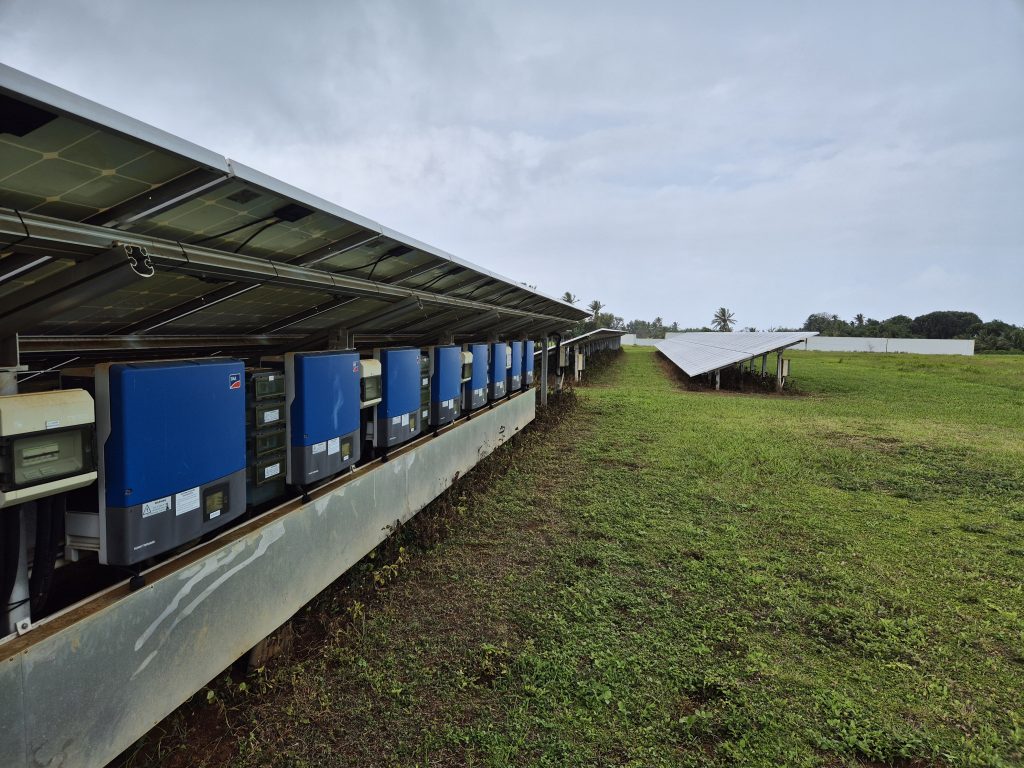
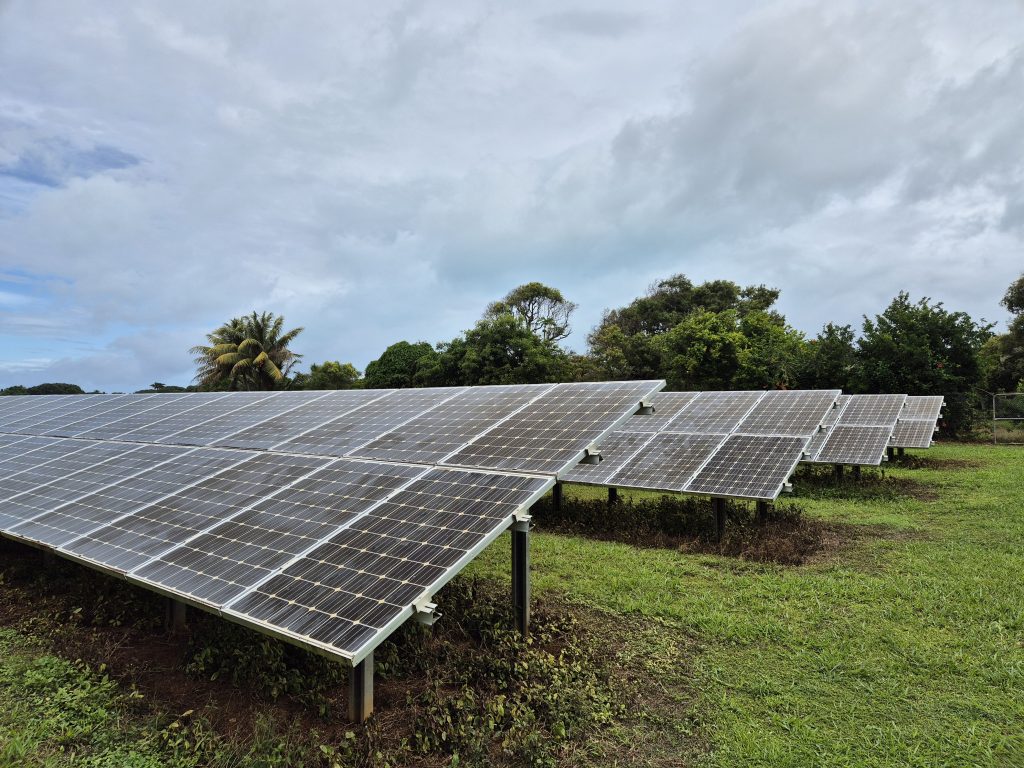
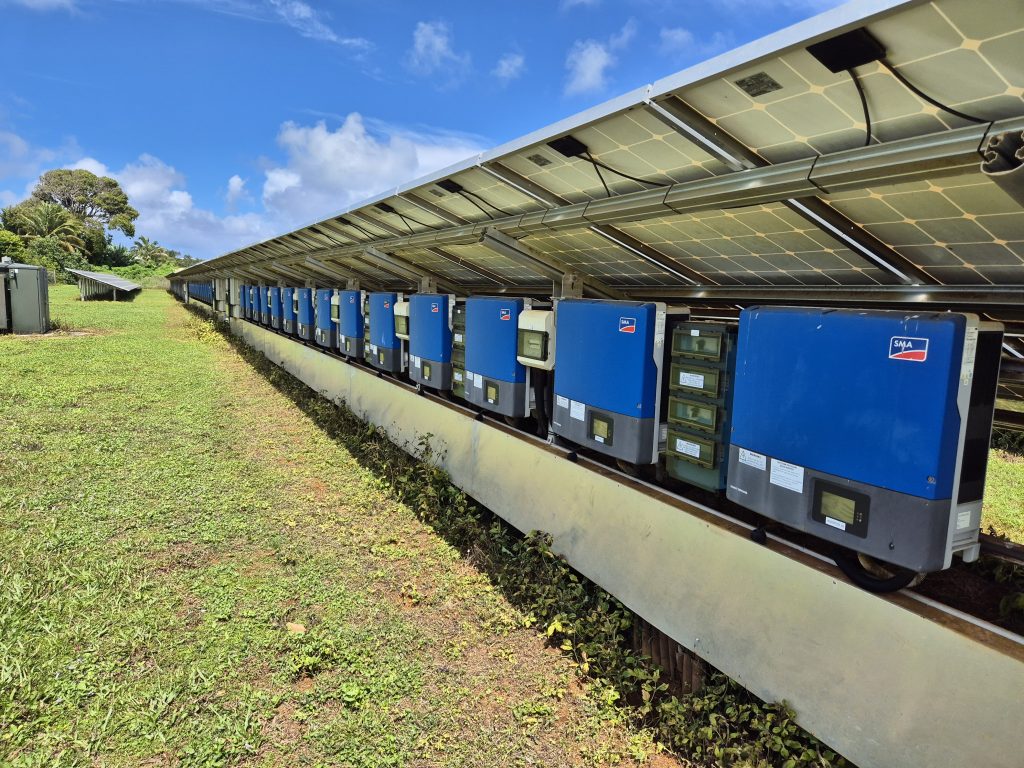
Above: Images of solar panels and equipment from Stage 1 of Entura’s renewable energy work.
Building national capabilities
From the outset, the CIIC and the CFCSP wanted both pieces of work to develop national capabilities. The terms of reference included explicit provisions for staff training and knowledge transfer, ensuring skills would be built and remain in-country.
Beca provided practical training for staff from CIIC, the Ministry of Health, the Ministry of Infrastructure, and Climate Change Cook Islands. With only 2 semi-retired structural engineers in the country, the methodology was designed to be easily understood by non-engineers.
For Anne, this was critical.
“Beca made sure that non-engineers, like myself, understand the methods they used to reach their conclusions, and that we can translate those reports for the people who make the decisions around what work we actually do,” she said.
CIIC now equipped to progress both programmes
With the structural assessment of health facilities complete, a replicable assessment methodology and tools in place, and final designs and costings prepared for the next stage of the renewable energy project, the CIIC is now well positioned to progress the ATOM project and Aitutaki Renewable Energy Project Stage 2 to their respective next steps.
“Key to this work supported through the CFCSP was that it leaves us with tools and understanding we can keep using. Every project we do from now on will benefit from that,” Anne concluded.
_______________________
Feature image: Anne Taoro, General Manager, Asset Development at the CIIC (left) with Noa Seru, CFCSP Team Leader (right).