
For International Women’s Day, Sunday 8 March 2026, the United Nations joins communities across the globe in calling for “Rights. Justice. Action. For ALL Women and Girls”. A theme for equal rights, access to justice and to dismantle systemic barriers facing women and girls, we reflect on the importance of gender equality, disability and social inclusion (GEDSI) in climate policy.
Acknowledging climate change can disproportionately affect women and girls in vulnerable regions such as the Pacific, improved gender-responsive climate action and inclusive policy frameworks are essential to delivering climate change adaptation and mitigation initiatives. The Climate Finance Capacity Support Programme (CFCSP) advocates for inclusive practices, both through embedded personnel and in short-term inputs. The programme’s GEDSI Strategy and Action Plan guides training, policy support and capacity building activities that ensure climate change support is inclusive of marginalised individuals and communities in the Pacific. Furthermore, the inclusion of a GEDSI Implementation Lead within the CFCSP’s Implementation Team helps strengthen internal GEDSI awareness and enhances the integration of GEDSI principles across the programme.
GEDSI work in-country focuses on both technical support and planning. In the Solomon Islands, for example, GEDSI was embedded in infrastructure planning, working towards inclusive climate-resilient development. Engaging a Gender Specialist to support the completion of a GEDSI Strategy and Action Plan – undertaking analysis, consultations and participatory workshops – the framework provides a clear institutional roadmap for inclusive infrastructure development. It defines responsibilities, timelines and mechanisms for implementation, setting a long-term direction for integrating GEDSI.
Beyond policy, the CFCSP has actively taken steps to integrate GEDSI in climate work across the Pacific to improve the involvement and heighten the voice of women in these roles. On this International Women’s Day, we seek to celebrate the outstanding work women supported by the CFCSP are doing across the Pacific:
In Samoa, Youth Engagement Consultant Vaitoa Toelupe (pictured far right) is actively engaging with youth organisations and community groups in climate change consultation forums and advocacy activities, supporting the next generation of climate action.
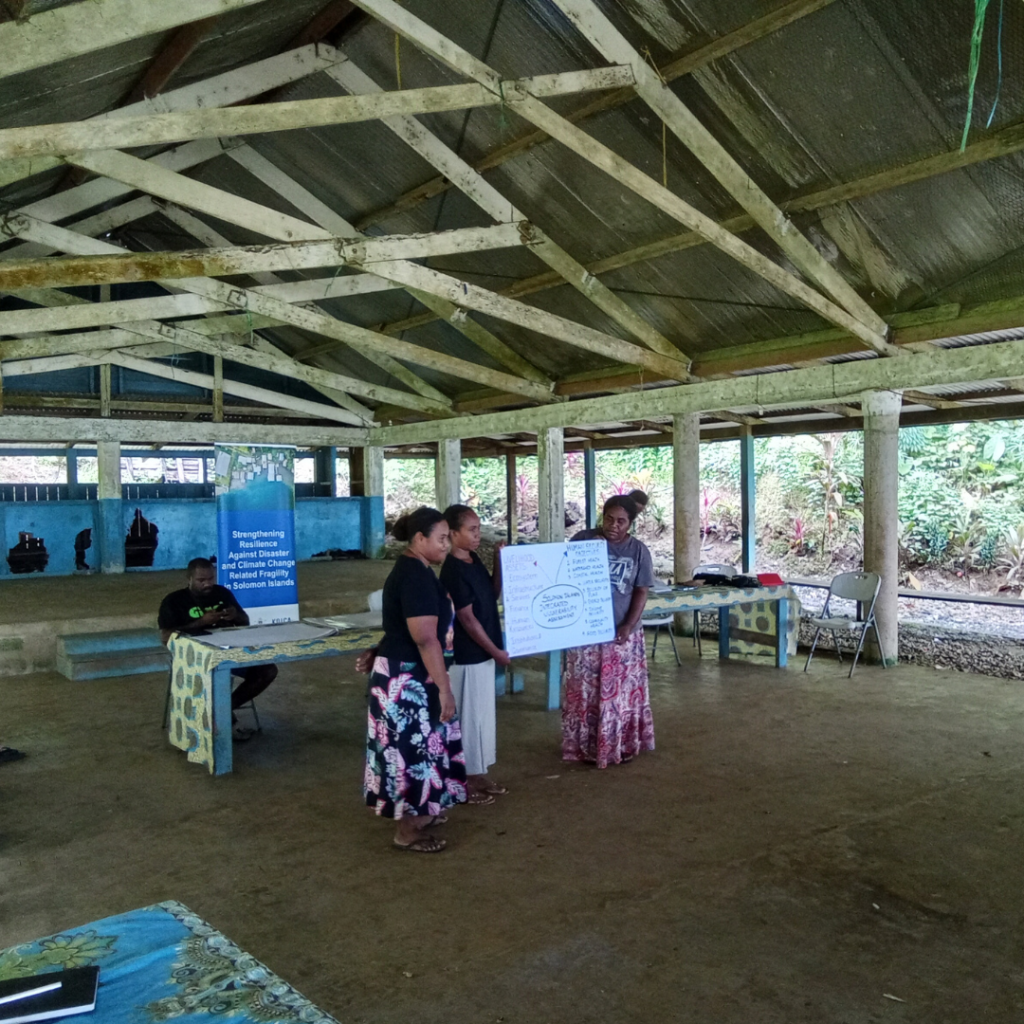
In the Solomon Islands, Integrated Vulnerability Assessment Officers Lois Maehorana and Mary Tehekeni have been working to combine traditional ways of adapting to climate change with modern assessment tools – data collection, analysis, technical summary write-ups – to conduct integrated vulnerability assessments, overall supporting and strengthening communities in their response to climate change.
Taking further steps to embed their work across the Pacific nation, Lois and Mary have also worked to build the next generation of climate warriors by raising awareness of climate change within schools
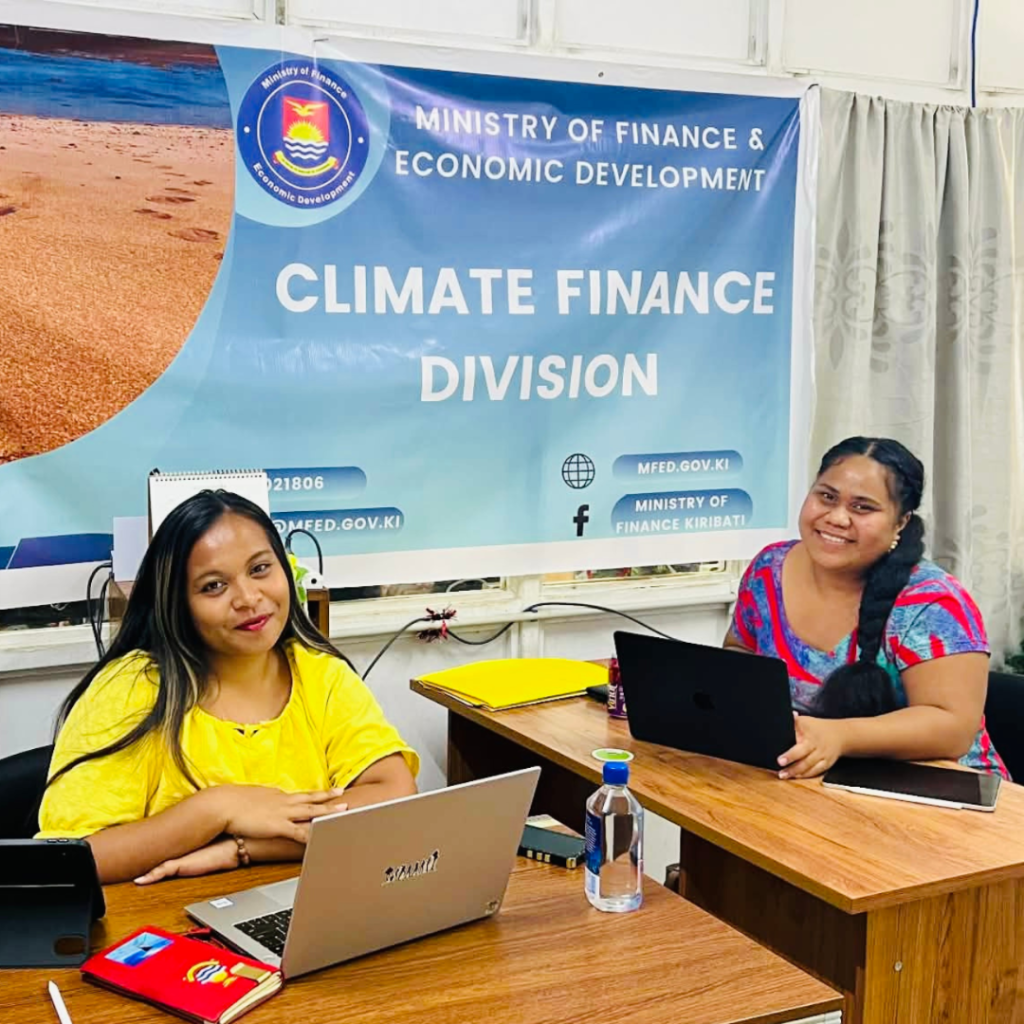
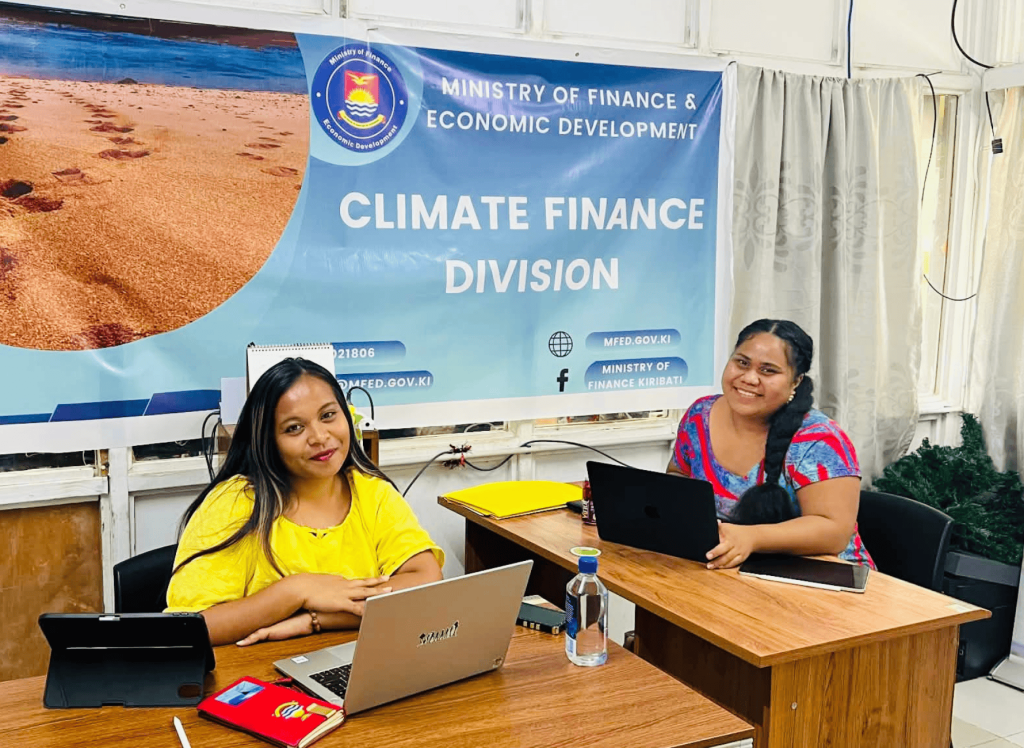
In Kiribati, graduate Mereta Terieta (right) recently joined the Climate Finance Division as a Climate Finance Division Support Officer. Providing technical and administrative support in the Division to ensure effective financial management, stakeholder engagement and reporting for climate finance programs, Mereta represents emerging climate change professionals in the Pacific.
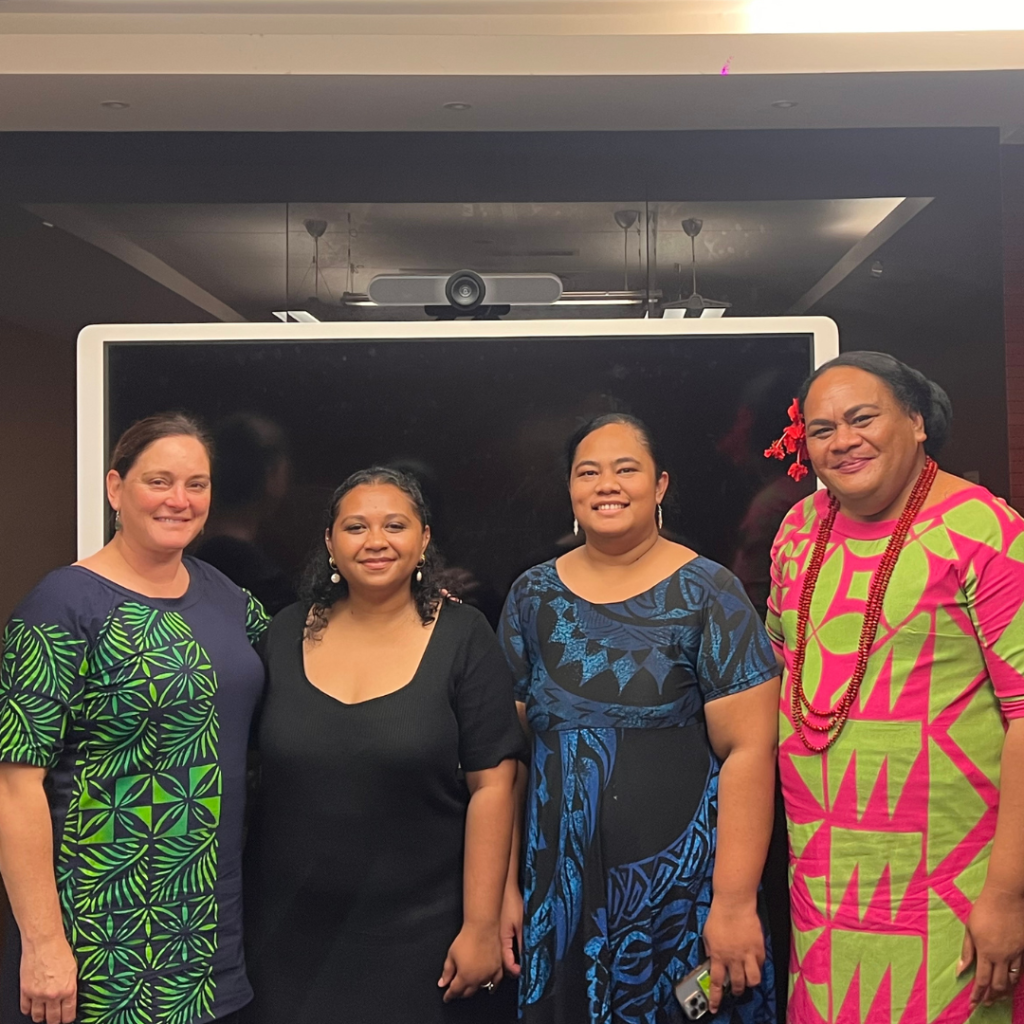
Tuvalu’s Climate Change Department has utilised Institutional Strengthening Expert Kate Morioka (front row, far left) and Program Finance Specialist Oyda Teo (front row, second from the left) in the delivery of programs and recommendations in the Department.

As International Women’s Day works to advance rights and justice for women and girls across the globe, the CFCSP’s work highlights the importance of GEDSI in climate systems, continually guided by the principal that in the work, no one is left behind. By strengthening institutional capacity for inclusive planning, supporting the development of gender-responsive strategies and advocating for meaningful participation from women in climate change work, the CFCSP hopes to contribute to a future in which climate action reflects the rights of all.
_______________________
Feature image: Climate Finance Division Support Officer Mereta Terieta (right) at the Climate Finance Division in Kiribati.