
June 2026
Responding to a Significant Financial Reporting Gap
In 2024, the Cook Islands Government faced a significant public financial management challenge: audited government financial statements were 5 years behind, with the most recent completed accounts covering the financial year ending June 2019. Such a significant backlog risked undermining confidence in the government’s management of public monies.
Major factors attributable to the backlog were:
Shortage and turnover of finance staff across the public sector.
Government agencies were not submitting financial statements on time.
Poor or inconsistent quality of financial statements.
The transition to a centralised, whole-of-government financial management information system (FMIS).
The Ministry of Finance and Economic Management (MFEM) faces a number of challenges. It is often expected to take on the work of other agencies to cover capacity and capability shortfalls, to the detriment of its core responsibilities. While the shortage of highly qualified skills has been longstanding, it was exacerbated in 2020 after residents left the Cook Islands in response to the COVID-19 pandemic. The cost of recruiting suitable, qualified chartered accountants has significantly increased to a level that the MFEM cannot afford due to current fiscal constraints.
As a result, staff within the MFEM’s Treasury Management Division (TMD) have often worked with fragmented spreadsheets, broken file links, inconsistent records and legacy working papers. Some signed and audited agency accounts would contain material errors and inconsistencies that further complicated the accounts consolidation process.
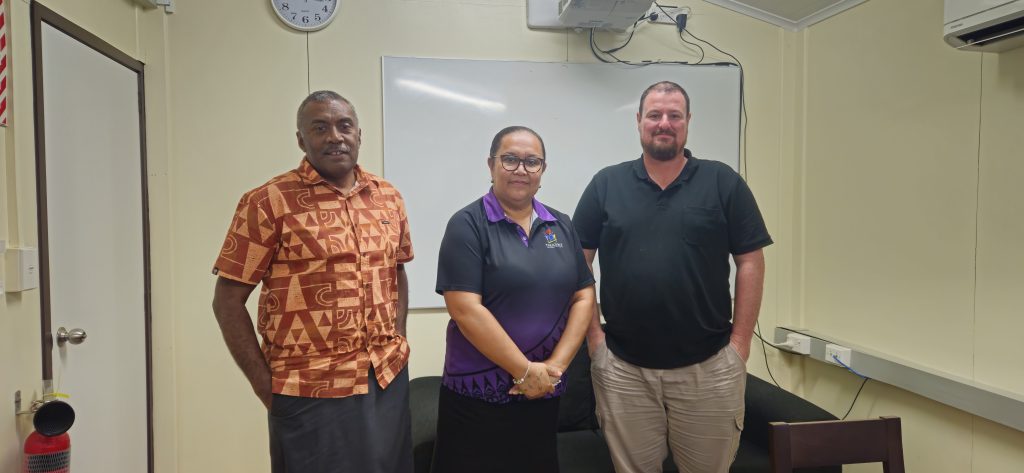
The MFEM recognised that it needed support to strengthen public financial management, build financial credibility and be better prepared and positioned to access climate finance. Support was requested from the Climate Finance Capacity Support Programme (CFCSP), funded by New Zealand’s Ministry of Foreign Affairs and Trade, for an embedded Financial Reporting Specialist to work within the TMD. The Financial Reporting Specialist role was designed to provide practical, hands-on support from inside government rather than through a short-term external consultancy. Nick Carter, the successful candidate with extensive public sector accounting expertise and previous experience working within the Cook Islands Government system, was recruited and mobilised.
Clearing the Backlog and Rebuilding the Foundations
The Financial Reporting Specialist engagement focused on 2 connected priorities. The first was to help clear the backlog by preparing and supporting the audit of the government’s consolidated financial statements for the financial years 2020 to 2022. This was completed in April 2026. The second priority was to strengthen the systems, tools and capability needed to improve the sustainability and quality of financial reporting over time.
This was a substantial undertaking given the preparation needed to consolidate accounts, which included combining the financial statements of 32 government departments, 10 outer island administrations, the Crown Parent¹ and 9 state-owned enterprises into a single International Public Sector Accounting Standards (IPSAS)-compliant set of government financial statements. Under normal circumstances, preparing just 1 year of consolidated accounts can take over 12 months.
Working remotely from New Zealand and through regular in-country missions, the Financial Reporting Specialist worked closely with TMD staff, the Cook Islands Audit Office (CIAO) and government agencies that were contributing to the consolidation process.
Key Outputs of the Engagement
The CFCSP-supported Financial Reporting Specialist contributed to the delivery of a wide range of financial reporting outputs, tools and process improvements. At the start of the engagement, many of these systems and resources either did not exist or were not in a reliable condition to support the government consolidation process. As a result, the first 10 months of placement focused heavily on rebuilding the underlying financial reporting foundation. This included strengthening working papers, improving consolidation tools, resolving inconsistencies in financial data and establishing more reliable processes for preparing the government accounts. Once these foundations were rebuilt and stabilised, the pace of account preparation and delivery increased significantly.
Key outputs delivered to date include:
1
A complete rebuild of all consolidation templates and financial statement templates. The new templates include step-by-step instructional notes, automated data links and clear data flows designed so future staff can use and maintain them without specialist support. This rebuild was declared complete in September 2025.
2
Completed and submitted IPSAS-compliant government financial statements for the financial years ending June 2020, June 2021 and June 2022, provided to the CIAO for audit.
3
The creation of a Statement of Appropriations to meet a new CIAO audit requirement. Three years of this statement were submitted for audit.
4
Crown Parent balance sheet reconciliations for the 2020 to 2023 period, now 85% complete. The CIAO has confirmed satisfaction with their scope and coverage.
5
Borrowings schedules, consolidation spreadsheets and supporting financial data completed through to 2023, with fixed asset registers completed through to 2025.
6
New agency reporting processes developed to improve the quality of financial information provided by departments and outer islands.
7
The annual fiscal commentary, required as part of each year's accounts, reduced from 20 to 4 pages for the catch-up period. This was agreed with the CIAO and the Treasury Director and does not compromise compliance.
As a result of these outputs, 3 full years of accounts were delivered to the CIAO in a seven-month period from October 2025 to April 2026. That compares to 10 months of foundation-building work in the first phase of the engagement, during which the tools and processes were rebuilt. In this time, the government’s arrears position narrowed from 5 years to 3 years behind (as of 3 April 2026). The financial year ending June 2023 is in the final stages of consolidation and are expected to be submitted to the CIAO by June 2026.
Following submission, work will commence on the 2024 and 2025 financial years, though at a slower pace due to more detailed presentation work, less agency audits completed to date and a more thorough assessment of new accounting standards.
When I commenced the role here, the Government was 5 years behind, and at the end of April, it is now 2 years behind. Great gains are happening and I felt confident that once the templates were done properly and the systems improved, things would begin to speed up, and this has happened.
— Nick Carter Financial Reporting Specialist, MFEM, May 2026.
The steady progress in clearing arrears is a strong signal of MFEM’s commitment to sound financial management, transparency and accountability. It demonstrates to our development partners and international climate finance mechanisms that the Cook Islands is strengthening its fiscal credibility and meeting its obligations in a timely and responsible manner. This progress helps build confidence in our public financial systems and reinforces our readiness to effectively manage and deliver on future development and climate financing opportunities.
— Elizabeth Tommy, Director Treasury Management, Ministry of Finance and Economic Management, May 2026.
Building Skills
From the beginning, the Financial Reporting Specialist structured the engagement to build capability within the TMD alongside delivering the accounts themselves. He directly supervised 2 members of the Crown accounting team. Rather than completing all reconciliation and consolidation work himself, he progressively assigned staff to different parts of the process and supported them to ‘learn by doing’.
The development of the Statement of Appropriations demonstrates this approach. When the CIAO introduced this as a new reporting requirement, the Financial Reporting Specialist designed the template, identified the required source data and prepared the first 3 years of reporting himself. Over time, the Crown accounting team became confident using the system and were able to independently complete the actuals component.
As a result, future finance staff joining the TMD should inherit documented and functional systems that support the preparation of government accounts, rather than the fragmented and inconsistent files that existed at the start of the engagement.
Working alongside Nick has significantly strengthened my understanding and confidence in managing consolidation and reporting processes. It has also been a very supportive experience, where I have had the space to share my views openly and feel that my contributions are recognised and my abilities trusted, which has helped me grow professionally. His structured approach, clear templates and practical guidance have made complex financial reporting tasks easier to follow and apply. I am now able to work more independently through consolidation tasks with less step-by-step support and contribute more confidently to the preparation of consolidated government accounts.
— Leah Mae Bulosan, Crown Accountant, TMD, MFEM.
Strengthening Systems and Governance
Alongside preparing the outstanding financial statements, the engagement helped strengthen the foundations of government financial reporting within the TMD. This included improving consolidation tools and templates, introducing more consistent processes, strengthening the capability of Crown accounting staff and supporting closer coordination between MFEM, government agencies and the CIAO. The below 3 key developments were particularly important in creating more sustainable financial reporting systems within government:
- Coordination mechanisms with the audit office: A structured working relationship between CIAO and MFEM was established through the engagement, including regular meetings to agree timelines, manage audit adjustments and resolve data quality issues. The process by which agency accounts flow from departments to the TMD and to the CIAO for audit has been formalised and improved. The CIAO has confirmed satisfaction with the scope and quality of the reconciliations being submitted, reflecting governance arrangements that support reliable and timely financial reporting on an ongoing basis.
In addition, the CIAO aligned its support with MFEM’s workplan and vision by securing targeted technical assistance for auditing. In December 2025, CIAO received a secondee from Audit New Zealand to help strengthen audit capacity and support the momentum of MFEM’s progress.
- Planning for automation: An FMIS automation working group has been established to plan the automation of the consolidation process through the government’s central FMIS, with the Financial Reporting Specialist serving as a member. The target commencement year is FY 2026-27. This work will involve close collaboration between the Financial Reporting Specialist, the FMIS team and New Zealand-based FMIS consultants. When implemented, automation will substantially reduce the manual burden of producing consolidated accounts each year, reduce the risk of human error and make the process less dependent on the presence of any single specialist. The working group’s formation is itself a governance outcome: a cross-functional team with a shared mandate to improve the system that will continue its work after the Financial Reporting Specialist’s contract ends.
- Tools designed for the institution, not the individual: The rebuilt templates and reporting tools now belong to the TMD. They have been built in standard software, documented with instructional notes and structured so that staff can use and maintain them. This design principle, building for the institution rather than the person currently holding the role, is a step to ensuring a technical assistance engagement is more than a temporary fix and strives to contribute to lasting institutional capability.
Why this Matters
The work supported by the CFCSP through the Financial Reporting Specialist is connected to the TMD’s broader financial accountability function beyond the accounts themselves. The Green Climate Fund, bilateral development partners and multilateral institutions all require credible, audited financial statements as a condition of engagement. The Cook Islands is moving from a position of critical arrears to one of active recovery, with the tools, people and governance structures in place to sustain that recovery. This shift directly improves the country’s ability to access and account for the climate finance it needs to deliver on its national climate commitments.
The approach taken in this engagement – embedding a Financial Reporting Specialist with contextual knowledge, rebuilding from first principles with usability in mind, investing in team capacity throughout and establishing governance structures that outlast the contract – offers a model worth examining for similar support across the Pacific.
In 2026, Craig Murphy, New Zealand’s Constituency Director at the Asian Infrastructure Investment Bank, shared the following observation in a readout on Cook Islands government capacity:
A notable success has been an accountant, provided through New Zealand’s Climate Finance Capacity Support Programme, which has strengthened the Cook Islands’ ability to address the backlog in the delivery of its annual financial statements. This tailored, in-country support model could serve as a model for targeted all-of-government engagement to strengthen New Zealand’s relationships and influence.
— Craig Murphy, New Zealand Constituency Director, Asian Infrastructure Investment Bank, 2026.
The CFCSP’s support has helped the Cook Islands Government address a critical backlog in financial reporting while also strengthening the systems, processes and capability needed to maintain government accounts into the future. In doing so, it contributed to stronger public financial management and improved readiness to meet the financial governance expectations associated with international climate finance and development funding.
The systems, templates and institutional relationships developed through the engagement will remain within the TMD after the Financial Reporting Specialist role concludes. This creates a strong foundation for the Cook Islands Government to maintain timely and credible financial reporting, support ongoing public financial accountability and meet the financial governance expectations required for continued access to international climate finance and development support.
_______________________
¹ Crown Parent refers to the central government reporting entity used to prepare the Government’s consolidated financial statements.