January 2026
Background: Aitutaki’s Renewable Energy Journey
Located in the outer Cook Islands, Aitutaki’s electricity system is small, isolated and has historically been reliant on imported diesel, making it highly vulnerable to global fuel price volatility, supply disruptions and the growing cost of maintaining fossil fuel-based generation. Recognising these risks, the Government of the Cook Islands has long prioritised renewable energy as a pillar of national climate action and energy security.
Aitutaki’s transition toward renewable energy has unfolded over several years, with each phase building on the last through national leadership and enduring partnerships with donors and technical experts. Together, these efforts reflect the Cook Islands’ commitment to reducing reliance on imported diesel and strengthening climate and energy resilience across its outer islands.
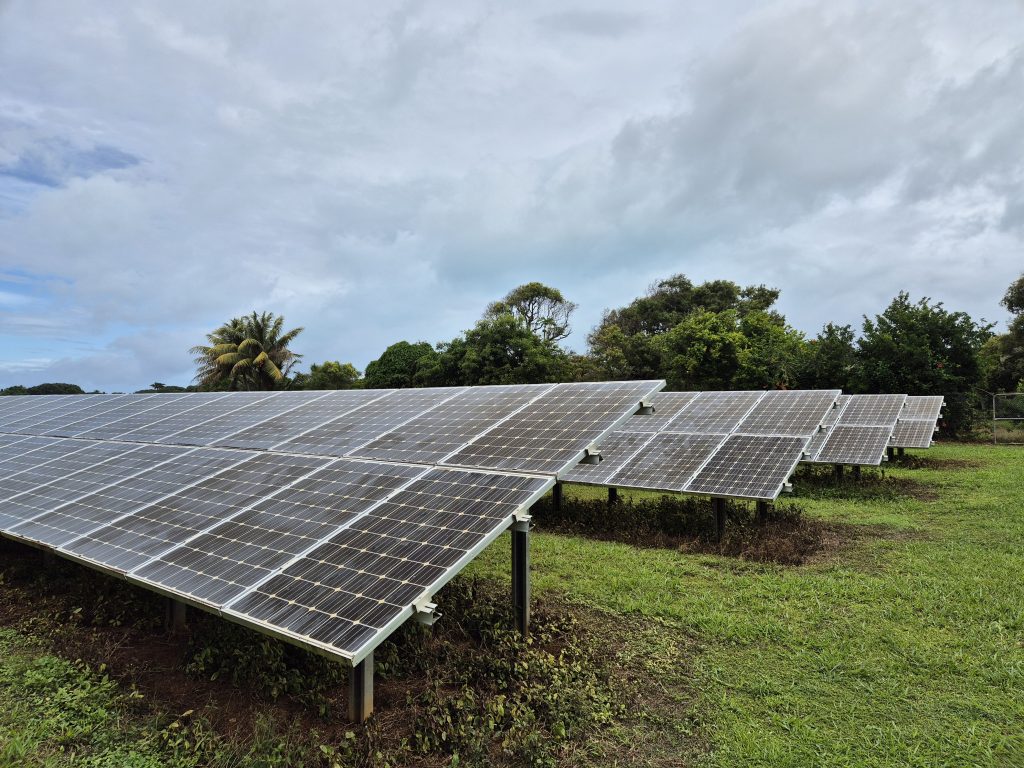
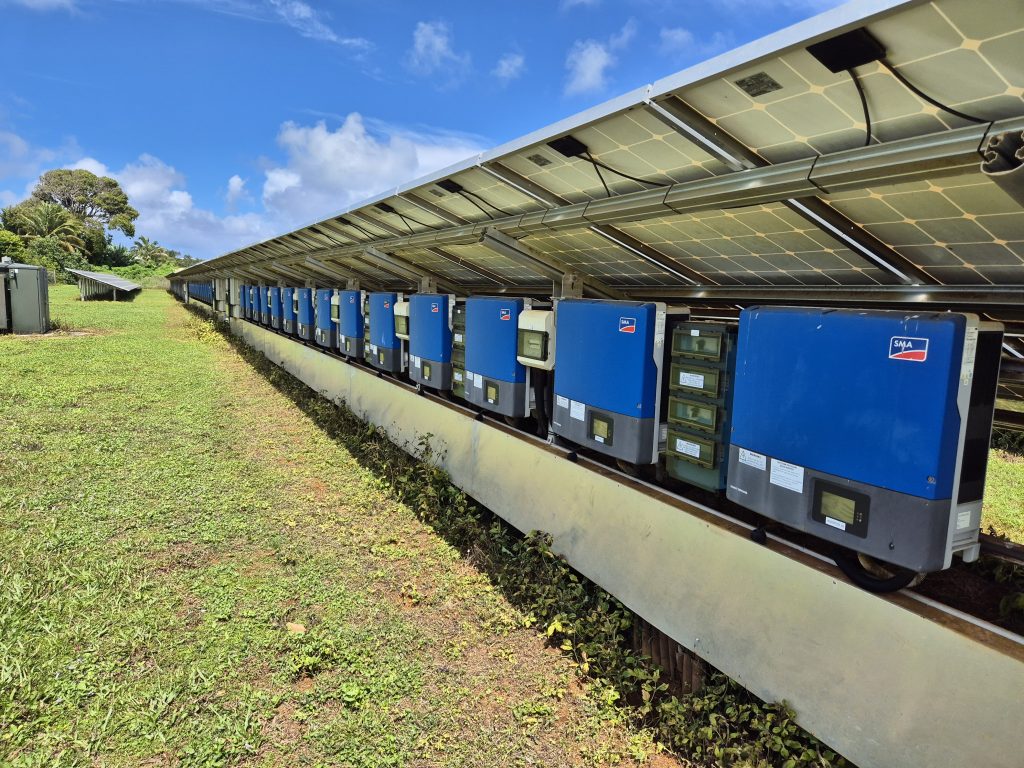
In 2019, the Cook Islands Government commissioned Stage 1 of the Aitutaki Renewable Energy Project, marking a major milestone in the country’s shift toward cleaner energy. The project introduced a 750 kilowatt (kW) ground-mounted solar photovoltaic (PV) array, a 240 kW diesel generator and a 500 kW/500 kW per hour (kWh) Battery Energy Storage System (BESS) across a 0.9 hectare site. Collectively, this system is capable of supplying the full daytime power demand for approximately 400 residential households across the island, including essential services like water pumping, while simultaneously storing clean energy for use during evening peak hours.
Delivered by New Zealand contractor Powersmart, the system immediately improved energy security by increasing solar power to between 20% and 30% of Aitutaki’s electricity. This corresponded with an estimated decrease in annual diesel costs by approximately NZD 250,000. During this phase, work in Aitutaki demonstrated the Cook Islands’ capacity to operate a hybrid solar–diesel–battery system effectively.
In 2023, plans for the second stage of the renewable expansion in Aitutaki began. Building on Stage 1, technical specialists from Entura – funded by New Zealand – completed a comprehensive feasibility study for Stage 2. This study recommended expanding the Aitutaki system with:
1.2 MW of new solar PV.
A 1 MW/4 MWh BESS.
A new diesel control system to improve operational stability.
This proposed expansion represents a leap in capability, nearly tripling the solar output and increasing the energy storage capacity nine-fold. This scale-up is critical for supporting the high-power demands of Aitutaki’s resorts and tourism infrastructure, projecting a final system that can cover between 65% and 70% of the island’s annual electricity needs and provide multi-hour battery backup for true energy independence.
In 2024, the New Zealand Ministry of Foreign Affairs and Trade’s (MFAT) Climate Flexible Finance provided additional investment to support national renewable upgrades across the Cook Islands, including support for the continuity of the Aitutaki Stage 2 Renewable Energy Programme. Later that year, a new activity focused on the Aitutaki Renewable Energy Project began through a partnership between the Climate Finance Capacity Support Programme (CFCSP), Cook Islands Investment Corporation (CIIC), Te Mana Uira o Aitutaki (TMU) and Entura. This stage advanced Stage 2 from feasibility of extending renewable energy to implementation readiness.
This activity centred on:
Refining technical preparations, such as detailed modelling, PV layout optimisation and updated grid stability analysis.
Developing procurement strategies and tender materials, ensuring the project could move efficiently into contracting.
Building local capacity, with targeted training for TMU and CIIC staff on system design, operational considerations and planning for high-renewable operation.
Details of the CFCSP’s Support for the Aitutaki Stage 2 Renewable Energy Programme
The Aitutaki Stage 2 Renewable Energy Programme was shaped through a strong partnership between TMU, CIIC, the Office of the Prime Minister, CFCSP and technical specialists from Entura, with all partners working collectively toward a shared vision of a more resilient, low-carbon energy future for the Cook Islands.
The preparation phase focused on 3 core areas – technical design, project planning and local capacity building – to establish a robust, evidence-based foundation for the system’s major expansion.
Technical foundations and system design
A foundational step involved a full system stocktake and gap analysis. This review mapped the current performance and limitations of Aitutaki’s diesel-solar hybrid system (Stage 1 configuration). The assessment highlighted load growth, system constraints and opportunities for optimisation to ensure planning for Stage 2 was grounded in accurate, up-to-date energy system knowledge. The findings of this stocktake led to a detailed system upgrade plan. Entura used this data to complete advanced load forecasting, solar PV layout optimisation, energy modelling and the integration requirements for a new 1.5 megawatt (MW)/6 MWh BESS. This work included full engineering specifications, solar farm layout designs and modelling for up to 2 MW direct current (DC) of solar PV, confirming the maximum feasible renewable contribution on Aitutaki’s limited land footprint. To allow for flexibility in procurement and technical rigour, 2 full PV module configurations were designed using specific options (one using 265 watt (W) Mitsubishi panels, the other using 550 W JA solar panels), each optimised for shading, tilt, spacing and constructability. A major technical output confirmed system stability for high-renewable operation. A DIgSILENT Power Factory grid stability study tested how the grid would behave under high-renewable penetration scenarios. The modelling simulated generator trips, PV and BESS disconnection, minimum and maximum load conditions, and a range of fault scenarios. It provided actionable findings on system inertia requirements, protection settings, operational risks and the essential role of the newly-commissioned 1 MW diesel generator (G4) in maintaining frequency stability during high-PV periods.
Project planning and governance
Following technical confirmation, the activity moved to implementation readiness by developing the procurement and governance arrangements. The development of procurement documentation was the next critical step. Together, government agencies and technical partners prepared the procurement framework for project management support, infrastructure delivery and equipment supply. Teams jointly reviewed tender documentation, evaluated options and ensured procurement decisions aligned with the long-term needs of the Aitutaki grid. This shared process strengthened confidence in the selected suppliers and provided a clear pathway for installation, testing and commissioning. Governance and documentation were continuously strengthened. The Activity Planning Document and all supporting materials were updated to reflect new technical findings, operational considerations and delivery pathways, ensuring all agencies were working from the same set of information.
Capacity building and partnership
Throughout the programme, a strong emphasis was placed on building local capability and ensuring knowledge transfer. Technical specialists functioned as embedded partners, not just external consultants. Entura and other technical specialists worked closely with local teams to provide continuous engineering guidance to TMU and CIIC staff. This approach strengthened local technical decision-making and ensured system design, installation and operations met both international standards and local performance requirements. The programme placed strong emphasis on whole-of-system coordination. The CIIC, TMU, CFCSP, MFAT Climate Flexible Finance and engineering teams worked together to align Stage 2 work with national renewable energy targets, climate commitments and broader resilience objectives. This unified, multi-stakeholder partnership ensures that the Aitutaki upgrade is a strategic contribution to the Cook Islands’ long-term transition toward clean, secure and climate-ready energy systems.
Outcomes and Change
The combined outputs resulted in significant, tangible progress for both Aitutaki and the national renewable energy programme. This project successfully moved the Cook Islands from early conceptual planning into a stage of implementation and operational readiness.
Technical advancement and grid resilience
Critically, the project delivered a technically-validated pathway for increasing Aitutaki’s renewable penetration from approximately 25% to more than 65%, marking a step-change in the island’s progress toward its national renewable targets. Financial viability continues to be tested.
Through the grid stability modelling, the Cook Islands Government now possesses a clear understanding of operational limits, ensuring that the system can integrate higher levels of variable renewable energy without compromising reliability. This technical clarity includes identifying the minimum diesel generation required to maintain inertia, assessing risks like pole slip under high-PV conditions and determining necessary protection settings needed before commissioning. As a result, energy operators can now make informed, safe operational decisions.
The Aitutaki technical specifications were developed through close collaboration with CFCSP, CIIC and TMU, including a review of the original feasibility sizing against the latest site conditions and operational constraints. This ensured the final specifications support high renewable penetration, system resilience and long-term reliability for Aitutaki’s islanded power system.
— Han Wong, Renewable Energy Engineer, Entura
Financial and environmental impact
The upgraded PV and BESS sizing recommendations (2 MW DC of solar and 1.5 MW/6 MWh of storage) provide the Cook Islands Government and CIIC with confidence that the investment will deliver measurable resilience and efficiency gains. These recommendations are forecast to deliver significant fuel savings and environmental benefits, including projected annual fuel savings of 594 kL and lifetime emissions reductions of 24,149 tonnes CO₂-e.
Institutional strength and implementation readiness
The comprehensive project outputs have also strengthened the framework for the future renewable investments.
The strengthened institutional coordination created through the Memorandum of Understanding and Project Steering Group arrangements will now guide the efficient implementation of Stage 2 and establish a sustainable model for managing future renewable investment pipelines across other islands.
Implementation readiness is ensured by procurement documentation that allows the Cook Islands Government to move smoothly into contracting, reducing project delays and financial risk. Furthermore, TMU and CIIC staff significantly strengthened their technical capability in energy modelling interpretation, procurement processes and system design analysis.
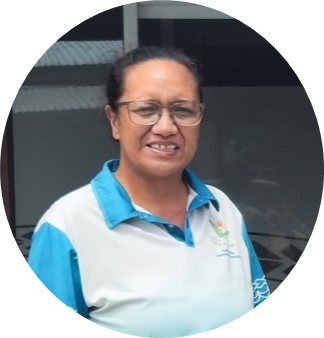
Working with the CFCSP, Entura delivered the technical specifications and procurement documents needed to make Stage 2 shovel-ready. The process also strengthened capability within TMU and CIIC, building practical knowledge in energy modelling and best-practice solar implementation.
— Anne Taoro, General Manager, Asset Development, CIIC
Why This Matters
This work accelerates the Cook Islands’ shift away from fossil fuels and toward cleaner, more resilient and more affordable energy systems, and each output contributes in a tangible way to strengthening Aitutaki’s energy future.
- Stocktake and gap analysis replaces assumptions with accurate system knowledge, establishing a robust foundation for safe and efficient renewable integration, and ensuring future investments are grounded in real-world data and aligned with long-term national planning. System upgrade planning, PV optimisation and BESS integration design confirms Aitutaki can accommodate up to 2 MW DC of solar generation, far more than previously expected. This opens the door to significant emissions reductions, cutting diesel consumption nearly in half and substantially improving the affordability of power supply for the community.
- DIgSILENT stability modelling addresses the fragility of Aitutaki’s small, isolated grid, identifying the operational conditions necessary to prevent blackouts, equipment stress and outages. By clarifying requirements such as maintaining the 1 MW G4 generator online for inertia, the modelling empowers operators to manage a renewable-heavy grid safely and confidently, a core element of climate resilience.
- Procurement strategy and tender documentation translate technical recommendations into action, allowing the Cook Islands Government to move from design to delivery. They ensure the solar and storage expansion can be procured efficiently, transparently and in line with international standards.
- Capacity building and technical training equip TMU and CIIC staff with the skills needed to manage and maintain the upgraded system. This strengthens national ownership and embeds technical expertise within the Cook Islands, supporting sustainable operations long after external support has concluded.
Together, these deliverables form a cohesive and future-focused platform for the Cook Islands’ renewable energy transition.
Next Steps
With Entura’s detailed feasibility refinement, system stability modelling and updated technical designs now completed, the CIIC is positioned to move forward with the next phase of implementation for the Aitutaki Stage 2 Renewable Energy Programme. The technical studies provide CIIC with a clear evidence base to progress procurement, finalise engineering decisions and begin staged construction planning.