
December 2025
Key to this work supported through the Climate Finance Capacity Support Programme was that it leaves us with tools and understanding we can keep using. Every project we do from now on will benefit from that.
— Anne Taoro, General Manager, Cook Islands Investment Corporation
Context
To strengthen national access to, and effective use of climate finance, particularly under the Green Climate Fund (GCF) proposal ‘Building Resilient and Healthy Cook Islands Communities’, the Cook Islands Investment Corporation (CIIC) sought targeted technical assistance through the Climate Finance Capacity Support Programme (CFCSP). CIIC aimed to ensure upcoming GCF-funded investments were grounded in robust, evidence-based climate risk assessments. To support this, the CFCSP engaged New Zealand-based engineering consultancy, Beca, to conduct climate vulnerability and risk assessments (CVRAs) and provide structural engineering guidance for climate-resilient healthcare infrastructure.
This work was initiated in the context of the Cook Islands’ escalating climate risks, including cyclones, flooding, storm surges and sea-level rise, that increasingly threaten critical public infrastructure. Healthcare facilities are central to both disaster response and community wellbeing and by ensuring these facilities are climate-resilient, they can continue to protect lives and maintain continuity of essential services. Recognising this, the CIIC moved to secure the technical support required to guide climate-smart infrastructure planning and investment.
Purpose
As the agency responsible for government-owned buildings, major projects and public facilities, the CIIC plays a central role in ensuring public health infrastructure is safe, functional and resilient. This responsibility spans a wide range of assets and services.
“We build and manage everything from government buildings to public facilities and, because we have limited specialist expertise in-country, we often need to engage external partners,” said CIIC General Manager, Anne Taoro.
Against this backdrop, the CIIC partnered with the CFCSP to address both an immediate technical need and longer-term organisational strengthening ambition. The prioritised technical need was to generate specialised engineering analysis, climate risk assessments and an evidence base required to progress the GCF’s proposal. This included producing CVRAs for priority healthcare facilities, identifying high-risk sites and outlining credible, costed adaptation options that would meet GCF’s investment and due-diligence requirements. Without this technical input, the GCF proposal could not move forward.
The longer-term organisational goal was to strengthen CIIC’s internal capability to plan, deliver and maintain climate-resilient infrastructure across the country. CIIC wanted to use this partnership not only to meet an immediate project requirement, but to build the systems, tools and in-country competencies – such as climate risk screening, asset management processes and understanding of structural engineering adaptation standards – that would allow the organisation to manage similar assessments and climate-resilience projects independently in the future.
Through the CFCSP’s support, Beca was engaged to:
Assess current and future climate risks to healthcare facilities across the Cook Islands.
Provide credible, evidence-based adaptation inputs to strengthen the GCF proposal.
Transfer knowledge, build technical skills and implement practical systems for the CIIC to sustain climate-resilient infrastructure planning and delivery over the long term.
Approach
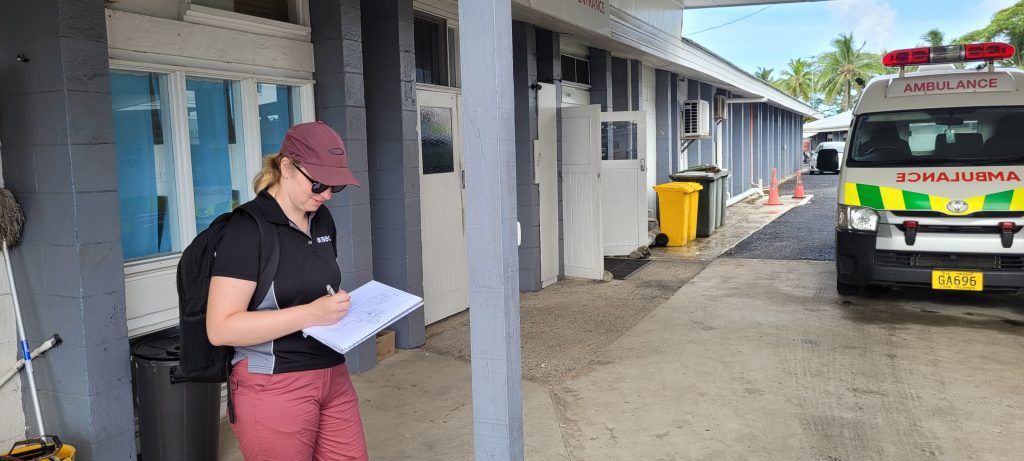
Between late 2024 and mid-2025, the CIIC and Beca collaborated under the CFCSP to conduct a comprehensive CVRA desktop study and subsequent site investigations of public healthcare facilities across 7 islands – Rarotonga, Aitutaki, Mauke, Mangaia, Penrhyn, Manihiki and Pukapuka – covering 40 buildings. Due to unforeseen circumstances (such as outer island logistics), site investigations for the remaining 5 islands could not be completed.
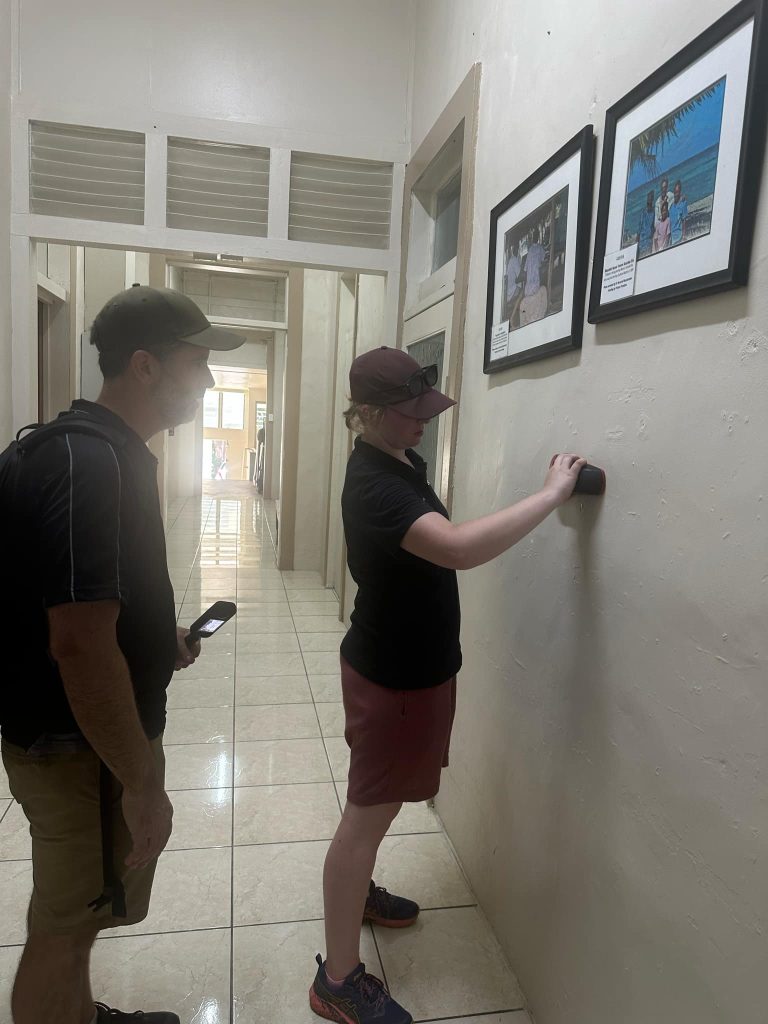
Each facility was evaluated against key climate hazards such as cyclones, flooding, storm surge, tsunamis, earthquakes and sea-level rise using both quantitative and qualitative approaches. The assessments combined laser scanning, concrete strength and reinforcement testing, 360° imaging and desktop analysis of building records and climate projections, alongside local consultations with Te Marae Ora (Ministry of Health) staff and community representatives. The partnership placed an equal importance on knowledge transfer and system strengthening with technical outputs. Beca engineers worked alongside CIIC project officers and local engineers, sharing methodologies, digital templates and diagnostic tools that now feed into CIIC’s Asset Management System. This collaborative approach built CIIC and other agency confidence to independently conduct future assessments and integrate climate-risk data into investment planning.
According to Anne, “Beca made sure that non-engineers, like myself, understand the methods they used to reach their conclusions and that we can translate those reports for the people who make the decisions around what work we actually do.”
The activity delivered 3 outputs to guide national planning:
- Climate Change Context: Northern and Southern Cook Islands (February 2025).
- The Climate Change Risk Assessment (CCRA) Guidance for Cook Islands Healthcare Facilities (April 2025).
- The Structural Assessment Report (August 2025), containing building-by-building vulnerability ratings and costed adaptation options.
Together, these deliverables provide both the technical foundation for the GCF-funded health project and the institutional capability for the CIIC to manage future climate-resilient infrastructure investments.
During this project, it became clear that delivering structural and climate risk assessments across the outer islands demanded an adaptive and contextually-grounded approach. The project applied a flexible management style, continuously refining methods in response to on-the-ground realities. For example, early field missions to Rarotonga and Aitutaki were used to test and improve data collection tools before deployment to more remote islands, ensuring efficiency and consistency. When access to roof spaces or structural drawings proved limited, engineers adopted representative sampling and non-destructive testing techniques to maintain data quality.
Logistical challenges, including fuel shortages that delayed travel to the Northern Group, were managed through remote coordination with island officials and local partners to complete assessments. Throughout the process, local integration was central – the CIIC and Te Marae Ora staff contributed knowledge of past flooding, cyclone impacts and maintenance histories, grounding the analysis in lived experience and ensuring technical findings reflected both the physical and social realities of each island setting.
Technical Findings and Results
A defining feature of this activity was the combination of technical analysis with hands-on capacity building and systems strengthening. Rather than outsourcing assessments, Beca worked directly with CIIC engineers and project officers, transferring knowledge through practical fieldwork, co-development of tools and mentoring to build confidence and long-term capability.
Practical, on-the-job mentoring enabled CIIC staff to join engineers on-site to learn laser scanning, data logging and inspection methods, applying these skills during subsequent missions. This approach ensured local teams could conduct follow-up assessments independently and adapt the methodology for future infrastructure sectors.
Standardised tools and templates were co-developed, providing digital and paper-based data collection systems that were later integrated into the CIIC’s Asset Management System. These now serve as a national standard for assessing and monitoring public buildings.
A challenge is that we don’t have a large pool of project managers or engineers available to upskill. While we can train those that are here on the day, there is no guarantee they will still be here 6 or 12 months later. I think what has worked out is that [Beca] pulled together a methodology that is easy for someone to pick up, read in simple English, so if there are staff movements, we are not back at square-one again.
— Anne Taoro, General Manager, Cook Islands Investment Corporation
The 3 key outputs formalised the methodology and provided detailed, step-by-step processes, reference tables and adaptation frameworks. These serve as technical manuals for the CIIC and other ministries, ensuring continuity of practice and alignment with GCF design standards.
At the systems level, the CIIC’s Asset Development Division has embedded the new Climate Risk Register and scoring framework into its asset management processes. This integration means climate-risk information will directly inform project proposals, design briefs and maintenance planning, enabling evidence-based decision-making across public infrastructure investments.
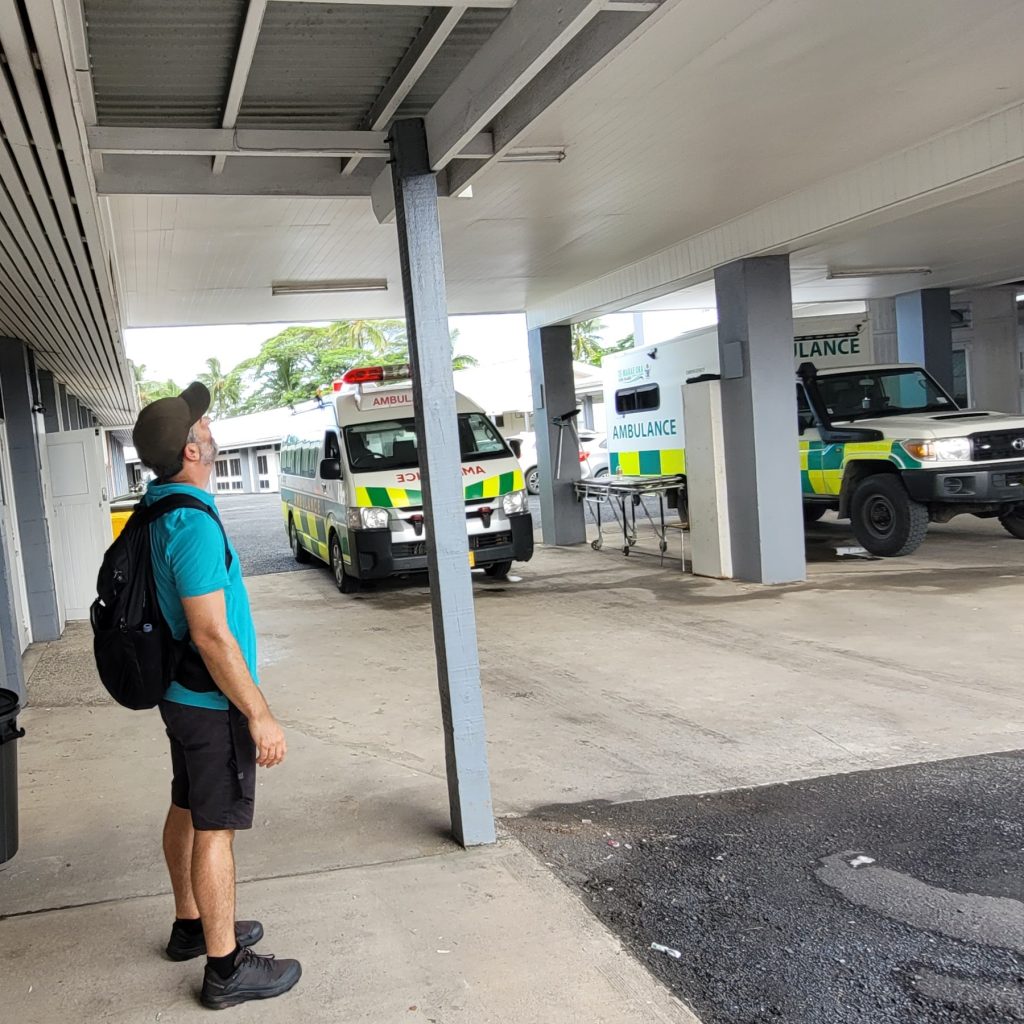
From a technical standpoint, the assessments generated the first national dataset linking engineering evidence to climate vulnerability across the health sector. A total of 40 healthcare facilities were assessed across 7 islands, producing a rich evidence base for policy and planning. The results revealed that many older buildings constructed before 2019 were not designed to current cyclone wind load standards, with roof connections, wall bracing and corrosion identified as common weaknesses. However, most facilities in the Southern Cook Islands are situated at safe elevations, reducing direct flood exposure and their concrete-frame systems provided strong foundations for targeted adaptation.
These findings were consolidated into a national Healthcare Climate Risk Register and traffic-light rating system, giving the CIIC a clear, evidence-based framework for prioritising upgrades and sequencing investment needs. Staff who had participated in the fieldwork later led follow-up inspections using the same tools, demonstrating the utility of the methodology and the application of newly acquired skills.
“It gives us a better picture of what work is required on the ground. It means we’re really targeting the intent of the fund, which is climate adaptation,” said Anne Taoro.
“Healthcare buildings are an important community asset, and the wind-related risks are based on the importance of the building. The assessment findings are a means to understand vulnerability with respect to cyclones,” added Craig Lavin, Structural Technical Director from Beca. The project also fostered stronger coordination between the CIIC and Te Marae Ora, aligning health infrastructure resilience with national planning and ensuring that climate adaptation decisions are informed by both technical evidence and local context.
Next Steps
Building on the foundations established through this activity, the CIIC is well-positioned to advance the next phase of its climate-resilient infrastructure programme. The immediate focus will be on translating Beca’s technical findings into detailed designs for each health facility, ensuring adaptation measures are clearly scoped, costed and aligned with national building standards.
This process will be piloted at the Mauke public health facility. The CIIC will engage design firms to prepare construction-ready packages, incorporating the recommended structural engineering adaptation measure that are compliant with the 2019 Building Code and updated climate hazard standards.
Using the climate risk register and the outcome of the pilot project in Mauke, all public health facilities will be ranked by urgency, enabling investments to be strategically aligned with available financing. At the same time, the CIIC will continue to build national capacity, completing outstanding island assessments and expanding the CVRA methodology to other public assets, including schools and community buildings.
According to Rebecca Johnson from Beca, “The goal is to lift those building assessed with a risk level of red or purple to an orange. If we can lift 100 buildings up to a reasonable level across the Cook Islands using available resources, this is going to have more of a long-term impact than a concerted effort to increase 2 or 3 buildings to a high standard.”
Finally, the CIIC will embed a system of regular monitoring and maintenance, integrating periodic resilience reviews into its asset management cycle to ensure that the gains achieved through the CFCSP-supported work are sustained and continually strengthened over time.